
The Monochrome Streetwear Look, Explained
By Cole Ramsey, Chicago streetwear writer covering sizing, layering and care.
Monochrome streetwear is one color family worn head to toe, with shade, texture and fit doing the work a loud print usually does. That is the whole look. No accent color to bail you out, nothing to hide behind. Done right, it looks expensive for very little money. Done wrong, it looks like a uniform somebody issued you.
What counts as monochrome streetwear?
A monochrome streetwear outfit keeps every main piece, hoodie, pants and usually the shoes, inside one color family. Same family, not the same exact shade. Charcoal hoodie, slate joggers, light grey sneakers? Monochrome. Three pieces in the identical grey? Also technically monochrome, and also a bit dead.
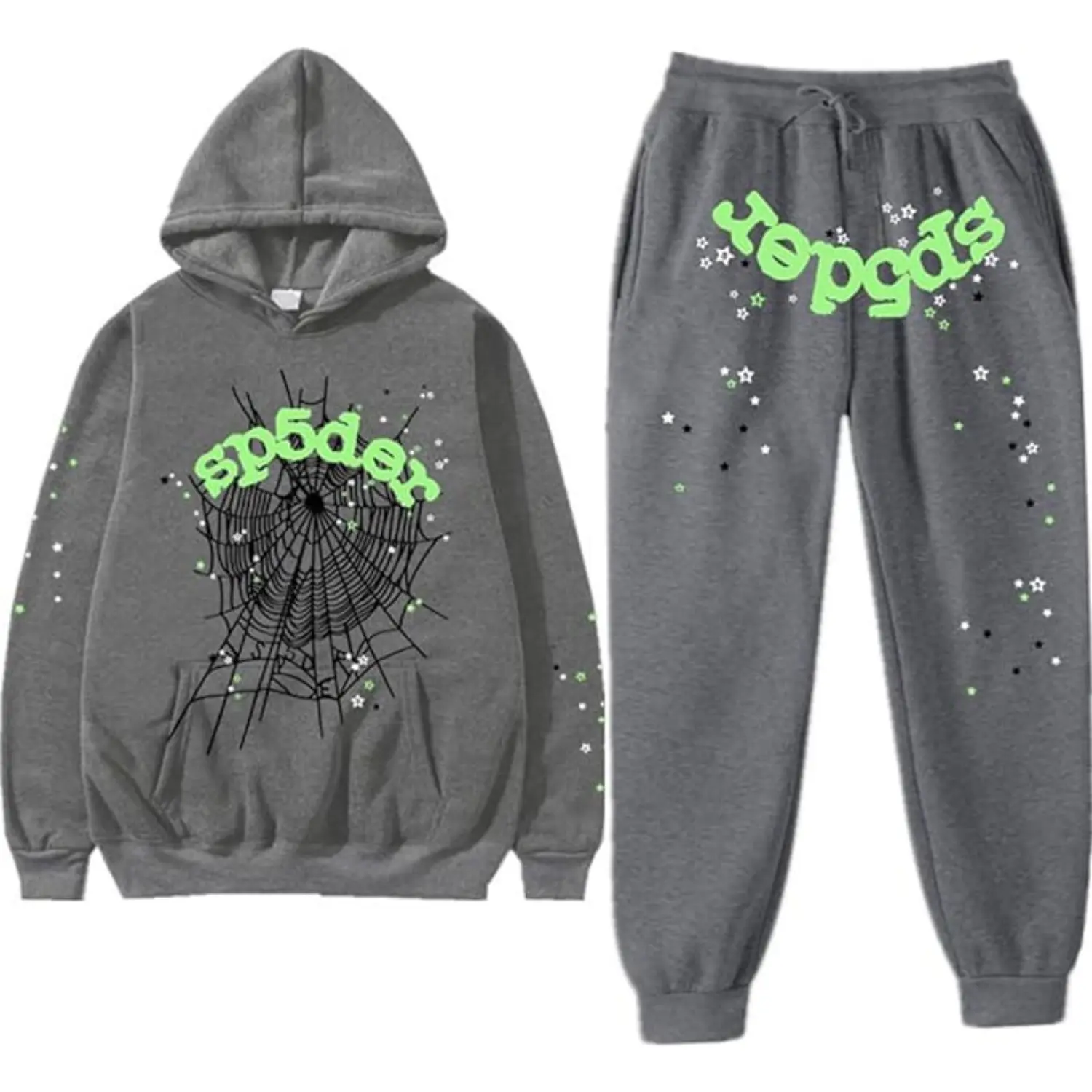
There are two ways to play it. Pure tonal means zero contrast anywhere, which is the hardest version to pull off. The version most people actually wear is a one-color base with a single print acting as the only accent. A matching Sp5der sweatsuit is basically that second version, pre-assembled for you.
Which colors work best for a monochrome fit?
Muted colors work best for monochrome streetwear, because black, grey, beige and brown forgive small shade mismatches that bright colors punish. Bright monochrome is hard mode. Buy a pink hoodie and pink pants separately and the two pinks will almost never land on the same note. That is exactly why head-to-toe bright color looks like a costume unless it came as a matched set. Here is how the main colors behave:
| Color family | Difficulty | Why it works (or doesn’t) | Best way to add depth |
|---|---|---|---|
| Black | Easy | Hides shade differences, reads sharp instantly | Mix matte fleece with nylon or leather |
| Grey | Easy | No undertone to clash, huge shade range | Go dark on top, lighter below (or the reverse) |
| Beige and cream | Medium | Looks rich, but shows dirt and yellowing fast | Step from cream to sand to tan |
| Brown | Medium | Warm and grown-up, shades can drift red or green | Pair with suede shoes in a close tone |
| Navy and blue | Medium | Navy is safe, sky blue gets loud quickly | Keep the lightest blue closest to your face |
| Pink, green, red | Hard | Separates rarely match; only matched sets land | Keep shoes and accessories neutral |
If this is your first monochrome fit, start with grey. The Web Slate Grey sweatsuit gives you a full grey base, and nobody has ever looked worse in grey than they did the day before.
How do you keep a one-color outfit from looking flat?
A monochrome outfit stays interesting through shade steps and texture, since color is no longer doing any of the work. Shade steps come first. Put your darkest piece either on top or on the bottom, never in the middle, and let the outfit move light to dark in one direction. Your eye reads that as a choice.
Texture is the second lever, and people skip it. Heavy brushed fleece next to smooth nylon next to suede looks styled. Three pieces of the same flat cotton looks like pajamas. Same color, totally different outfit.
Then fit. With no color contrast to guide the eye, the silhouette is the outfit. A boxy hoodie over tapered joggers keeps a clean shape. Oversized everything turns into a blob. If you are unsure which cut you want on top, our breakdown of boxy, regular and slim hoodie fits settles it in a few minutes.
Does a graphic print break the monochrome look?
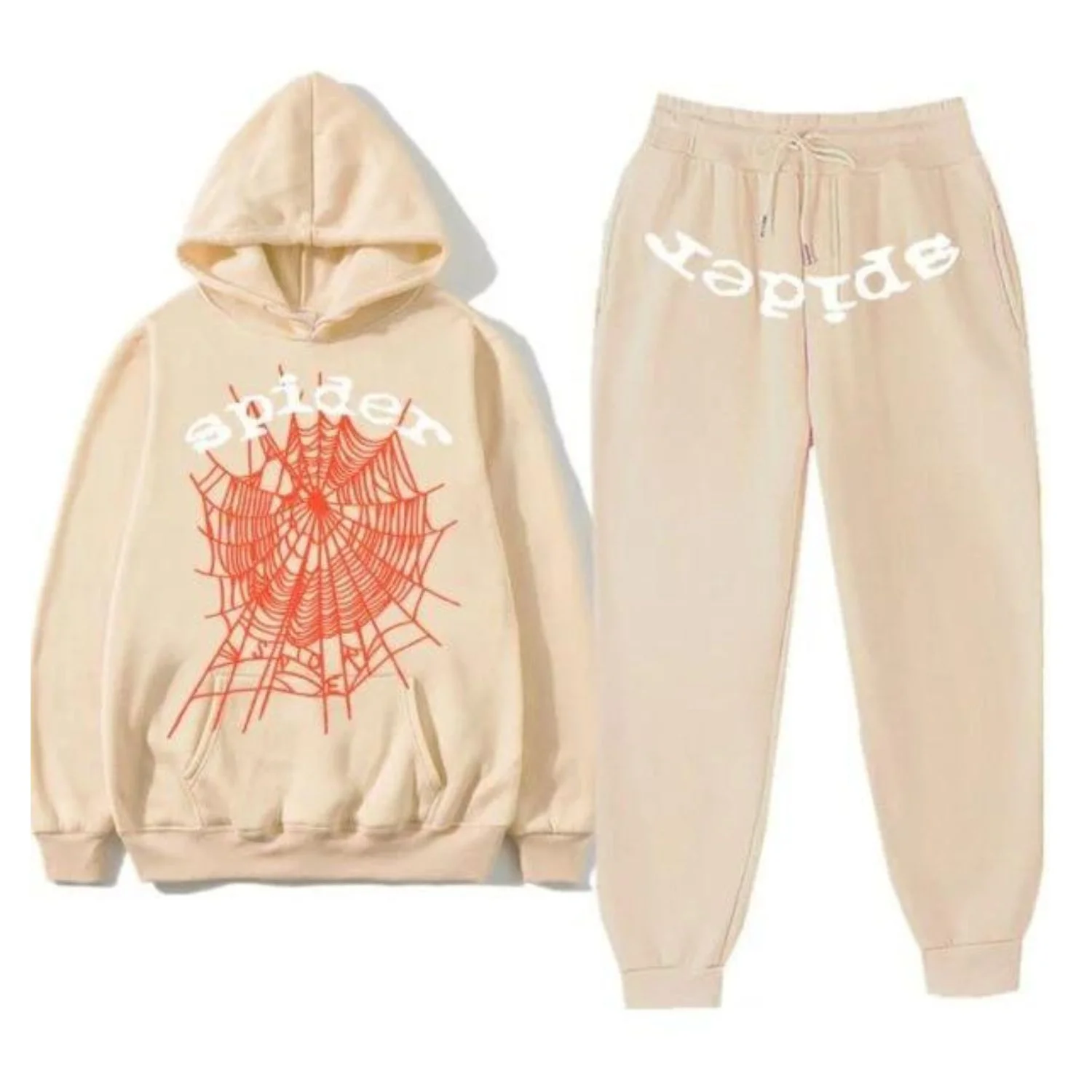
A graphic print does not break monochrome streetwear as long as it is the only contrast in the outfit. Think of the print as your single allowed accent. The Web Beige sweatsuit works exactly like that: cream all over, one orange web, done. What breaks it is adding a second accent somewhere else, like orange sneakers plus a red cap plus a printed bag. Now it is just a colorful outfit that started out monochrome.
Underneath, keep it quiet. A plain tee in the same color family, or something like the Web Black tee under an all-black fit, adds a layer without adding a new color.
What shoes go with a monochrome outfit?
The best shoes for a monochrome outfit sit inside the same color family or go one clean step lighter or darker. Black fit, black sneakers. Grey fit, grey or white. Beige fit, cream or gum sole. White sneakers are the one universal cheat, but they add contrast at your feet, so the look shifts from strict tonal to one-color with a clean finish. Honestly, that is fine. Most people wear it that way.
A quick checklist before you walk out:
- Every main piece sits in one color family.
- At least two different shades, arranged light to dark in one direction.
- At least two different textures.
- One accent at most, and if the hoodie has a print, the print is it.
- Shoes match the base or step one shade away from it.
- The fit holds a clear shape, so no pooling hems and no drowning shoulders.
For bottoms that complete a tonal fit, the sweatpants range covers the neutral colors this look actually runs on.
FAQ
Is monochrome streetwear the same as matching?
No. Matching means identical pieces, often from one set. Monochrome streetwear means one color family, and the best versions deliberately mix shades and textures inside it. A matched set is a shortcut to monochrome, not the definition of it.
Can I do monochrome in a bright color?
Yes, but only with pieces made to match, like a full sweatsuit from the same run. Bright separates bought at different times rarely hit the same shade, and the mismatch is obvious in daylight. Keep shoes and accessories neutral so the color stays the only statement.
What if the outfit looks boring?
A boring monochrome outfit is missing either shade contrast or texture. Swap one piece for a lighter or darker version, or trade a cotton layer for nylon, suede or denim. You almost never need to add a color to fix it.
Does all-black count as monochrome?
Yes, all-black is the most common monochrome streetwear fit and the easiest one to start with. Keep it from going flat the same way you would any other color, by mixing matte and shiny fabrics and letting one piece carry a print.