
Washing Graphic Prints So They Last
By Cole Ramsey, Chicago streetwear writer covering sizing, layering and care.
Cold water, inside out, zero dryer heat. That is the whole religion of keeping a graphic print alive, and the rest of this guide is the detail that makes it stick. Screen prints and puff prints do not wear out from being worn, they wear out from being washed wrong. A Sp5der tee that gets babied will still look sharp after two years of rotation, while the same shirt tossed in hot water with a heavy spin cycle starts cracking by month three. You paid for the graphic, so protect the graphic.
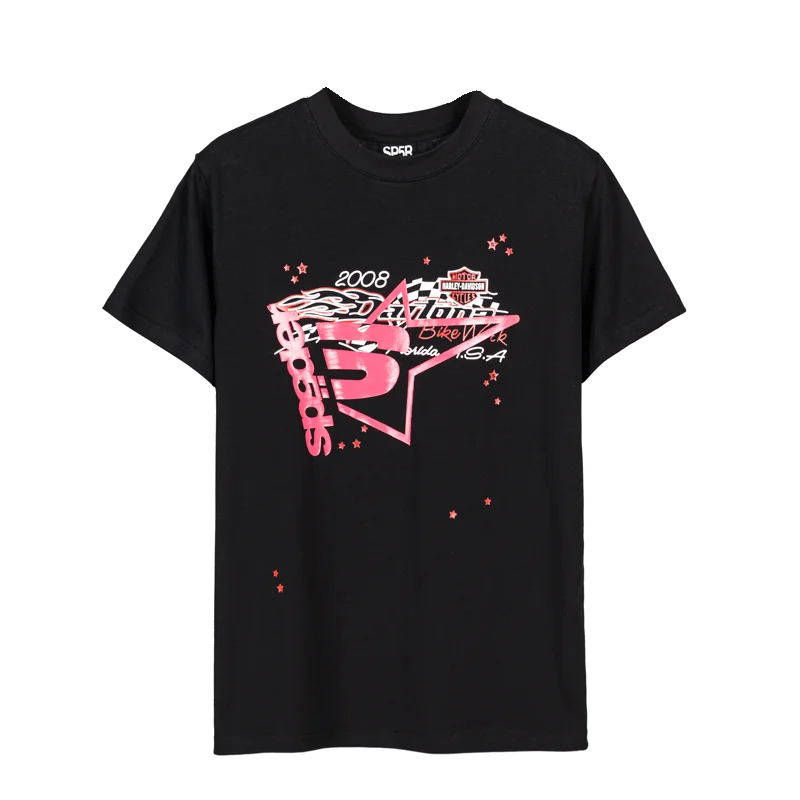
Why prints crack in the first place
Graphic prints crack because the ink layer sits on top of the fabric instead of soaking into it, and anything that flexes or heats that layer breaks it down. Screen print ink, puff ink and rhinestone glue are all plastisol or adhesive based, which means they behave like a thin sheet of plastic bonded to cotton. Heat softens that sheet. Agitation flexes it thousands of times per cycle. Friction from zippers and rough denim sands it down. None of this is a defect, it is just physics, and it is why a heavily printed piece like the Motocross tee in black deserves a different wash routine than a plain blank.
The wash routine that actually works
The correct routine for any printed piece is cold water, garment turned inside out, gentle cycle, and air dry. Turning the shirt inside out is the single highest value move because it puts the fabric between the print and everything the drum throws at it. Cold water matters because plastisol starts relaxing with heat, and a hot cycle is basically a slow re-melt. Here is the full checklist, in the order you should do it:
- Turn it inside out. Every time, no exceptions. The print should never touch the drum or other garments.
- Wash cold on gentle. Cold protects the ink, gentle reduces the flexing that causes micro cracks.
- Skip the heavy load. Jeans, hoodies with metal zips and towels are sandpaper for prints. Wash printed tees with other lightweight pieces.
- Use less detergent than you think. Excess detergent leaves residue that dulls colors. No bleach, no fabric softener on prints, softener coats the ink and makes it tacky.
- Hang dry or lay flat. The dryer is where prints go to die. If you absolutely must machine dry, use the no heat air setting and pull it out damp.
- Never iron the graphic. If the shirt needs pressing, iron inside out, or lay a cloth over the print and keep the iron moving.
Puff prints, rhinestones and web graphics need extra respect
Puff prints and rhinestone graphics are more fragile than flat screen prints because they have height, and height means more surface to snag and more glue to fail. Sp5der pieces lean hard into raised puff lettering and full web graphics, which is half the reason they look the way they do, so this is not a small detail on this brand. For a piece like the OG web hoodie in black and red, hand washing in cool water is honestly the safest play, and if that is too much effort, a mesh laundry bag inside a gentle cold cycle is the compromise that works. Rhinestones are glued, not stitched, so soaking time should stay short and wringing is banned. Squeeze water out gently, roll the piece in a towel, then hang it on a wide hanger so the shoulders do not get dented.

Flat print vs puff print care, side by side
The difference between caring for a flat print and a raised print comes down to how much mechanical stress each one can take. This table is the short version you can screenshot:
| Care step | Flat screen print | Puff print / rhinestones |
|---|---|---|
| Water temp | Cold | Cold only, short soak |
| Cycle | Gentle, inside out | Hand wash or mesh bag on gentle |
| Drying | Hang dry, air setting if desperate | Lay flat or hang, never machine dry |
| Ironing | Inside out, low heat | Never iron over the graphic |
| Wash frequency | After 1 to 2 wears | Spot clean first, wash only when needed |
One opinion I will die on: you are washing your tees too often. A graphic tee worn for a few hours in mild weather does not need a full cycle, it needs an airing out and maybe a spot clean. Every wash is wear, so the fewer cycles a print sees, the longer it stays crisp. That goes double for statement pieces like the Atlanta tee in black, where the graphic is the entire point of the shirt.
Storage is the half of print care nobody talks about
How you store a printed piece between wears matters almost as much as how you wash it. Prints stored folded with the graphic creased against itself can stick and peel, especially in a warm closet. Fold tees with the print facing out, or better, hang them. Keep printed pieces out of direct sunlight, because UV fades ink the same way it fades car paint. And give puff prints breathing room on the rail instead of crushing them into a packed closet. If you are building a rotation deep enough that storage becomes a real question, the full range in the shop covers tees, hoodies and sweatsuits, and the same care rules apply across all of them. For picking the right cut before you even get to washing it, our guide to boxy, regular and slim fits is the place to start.
FAQ
Can I put a graphic tee in the dryer on low heat?
You can, but you are trading lifespan for convenience. Even low heat softens plastisol ink over repeated cycles and the tumbling flexes the print. Air drying costs you a few hours and adds months of life to the graphic.
Why is my puff print getting shiny?
Shine on a puff print usually means heat damage, most often from ironing over the graphic or hot dryer cycles. The raised ink is melting slightly and flattening. There is no reversing it, so the fix is prevention: no direct heat on the print, ever.
How do I get a stain out without washing the whole shirt?
Spot clean it. Dab the stain from the fabric side with cool water and a drop of mild detergent, working from the outside of the stain inward. Avoid soaking the printed area and never scrub across the graphic itself.
Do I need special detergent for printed streetwear?
No. Any mild liquid detergent works, and liquid beats powder because it dissolves fully in cold water. What matters more is using less of it, skipping softener and bleach, and following the care label on the specific garment.